Introduction: The Myth of “Moving On” After Loss
In the language of grief, few phrases are as casually offered or as deeply misleading as “moving on.” It suggests that healing is a linear act of departure, a clean break from what once was. Yet for those who have lost a spouse, a life partner, or a defining love, grief does not behave like a road with a clear end. It behaves more like terrain as uneven, recurring, and shaped by memory. This is where travel, particularly repeated travel, can quietly challenge the myth of closure. A journey through Georgia reveals that healing is not about leaving grief behind, but learning how to walk alongside it without being consumed.
New York as Emotional Limbo After Widowhood
After widowhood, familiar cities can become emotional holding patterns. New York is once full of shared routines, private jokes, and future plans, turns into a place where memory outpaces movement. Every street corner carries an echo; every café becomes a reminder of who is missing. Life continues outwardly, but inwardly, time feels stalled. This limbo is not dramatic. It is subtle, persistent, and exhausting. Grief here is not loud despair but a quiet suspension, a sense that life is happening just out of reach. In such spaces, healing does not arrive through insight or resolution. What arrives instead is restlessness, the sense that staying put will not make grief clearer, only heavier.
Returning to Georgia: Continuity Instead of Replacement
Travel is often framed as escape, but returning to Georgia is not about replacement. It is about continuity. Georgia is not a substitute life or a “new beginning” that overwrites the old one. It is a place already woven into memory, visited before, known imperfectly, remembered honestly. Returning allows grief to exist without being interrogated. The country becomes a thread connecting past and present rather than a door slamming shut on what came before. Unlike the pressure to reinvent oneself elsewhere, Georgia offers something gentler: permission to remain the same person in a different setting. This continuity matters. It allows love and loss to coexist without competition.
Landscapes as Mirrors of Inner States
Georgia’s landscapes do not explain grief; they reflect it. The Caucasus mountains rise with a solemnity that mirrors the weight of loss of immovable, enduring, indifferent to personal timelines. The Black Sea, shifting between calm and turbulence, echoes grief’s unpredictable rhythm. Forests absorb sound and thought alike, offering silence without emptiness. These landscapes do not comfort in the traditional sense. They do not promise answers. Instead, they provide scale. Grief feels less like a personal failure and more like a human condition when placed against mountains that have endured centuries of storms. Nature does not resolve grief, but it validates it.
Healing Through Immersion Rather Than Explanation
Modern culture often treats healing as an intellectual task: understand the loss, process the emotions, reach acceptance. But grief resists explanation. In Georgia, healing happens through immersion through walking unfamiliar streets, tasting food whose names are difficult to pronounce, and listening to a language that does not invite analysis. Immersion quiets the mind without demanding insight. It allows the body to participate in healing before the intellect catches up. There is relief in not having to explain oneself, not having to narrate loss for others’ understanding. Grief becomes something lived rather than solved. This form of healing is slow, non-linear, and deeply human.
Carrying Memory Forward Without Erasing Love
One of the deepest fears after loss is that healing will diminish love, that joy will betray memory. The journey through Georgia disrupts this fear. Memory travels well. It sits at café tables, walks alongside old streets, and lingers during solitary meals. Love does not vanish when grief softens; it changes posture. It becomes quieter, less demanding, but no less real. Healing here is not an act of forgetting but of integration. The past is not sealed away; it is carried forward with care. This is what “healing without closure” looks like: a life that expands without requiring emotional amputation.
Conclusion: Why Healing Is Integration, Not Closure
Closure suggests finality, an ending neat enough to package and shelve. Grief rarely offers that luxury. A journey through Georgia reveals a different truth: healing is not about arriving somewhere free of sorrow. It is about learning to live fully while sorrow remains part of the landscape.
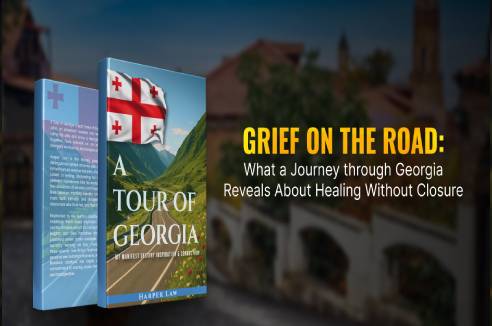
Integration allows loss to become one chapter among many, rather than the entire story being the real work. Travel does not cure grief, but it teaches movement without denial. In walking foreign roads, one learns that life does not wait for closure. It waits only for the willingness to keep going, carrying love forward, unfinished yet intact. A tour of Georgia is a way to move forward in life and explore new interests.